The Issue
Swimming at public beaches provides recreational enjoyment, relief from the heat, and connections with coastal resources that promote environmental stewardship. Bacterial problems severely impair beach access, are a serious public health issue, and trigger swimming advisories and beach closures. There is an urgent need to quantify variability in bacteria concentrations, link bacteria levels to an expanded set of environmental conditions, and identify transport pathways and connections to pollution sources. Such analysis ultimately can lead to better safeguards for public health.
Project Objectives
This Long Island Sound Study project focuses on human pathogen water quality issues at public beaches. Study sites are Green Harbor Beach in New London, an environmental justice community, and Rocky Neck State Park, among the most visited Connecticut State Parks. These beaches regularly experience pathogen-related advisories and closures and receive C and D grades on the Long Island Sound Report Card. This research project applies an innovative combination of observations, modeling, analysis, and outreach to address these issues.
Hypotheses:
1) There is strong hourly to daily variability in bacteria levels that is relevant to public health and swimming safety yet is missed by the current strategy for beach bacteria monitoring.
2) There are episodic water pathways and environmental conditions favoring transport from pollution sources and bacterial proliferation that contribute to high bacteria events at beaches.
Objectives:
1) To apply real-time field qPCR analysis techniques to measure high-resolution temporal and spatial patterns of fecal indicator bacteria (Enterococcus) at Green Harbor Beach and Rocky Neck State Park, public beaches suffering from bacteria issues, swim advisories, and closures.
2) To analyze links between observed bacteria levels and environmental conditions (rain, tides, winds, temperatures, and river flow) to support source identification and bacteria forecasting.
3) To quantify onshore/offshore transport and water retention times for beaches during varied summer forcing conditions with observations and high-resolution model results.
4) To identify water transport pathways between likely bacteria sources and beaches with observations and high-resolution model results.
5) To engage in experiential data-driven outreach on beach water quality issues with public school students, stewardship groups, environmental managers, and the general public.
Collaborations:
The project involves a sub-award to Save the Sound and collaborations with Ledge Light Health District, Connecticut Department of Energy and Environmental Protection, City of New London Recreation Department, and New England Science & Sailing.
Green Harbor Beach (New London, CT)
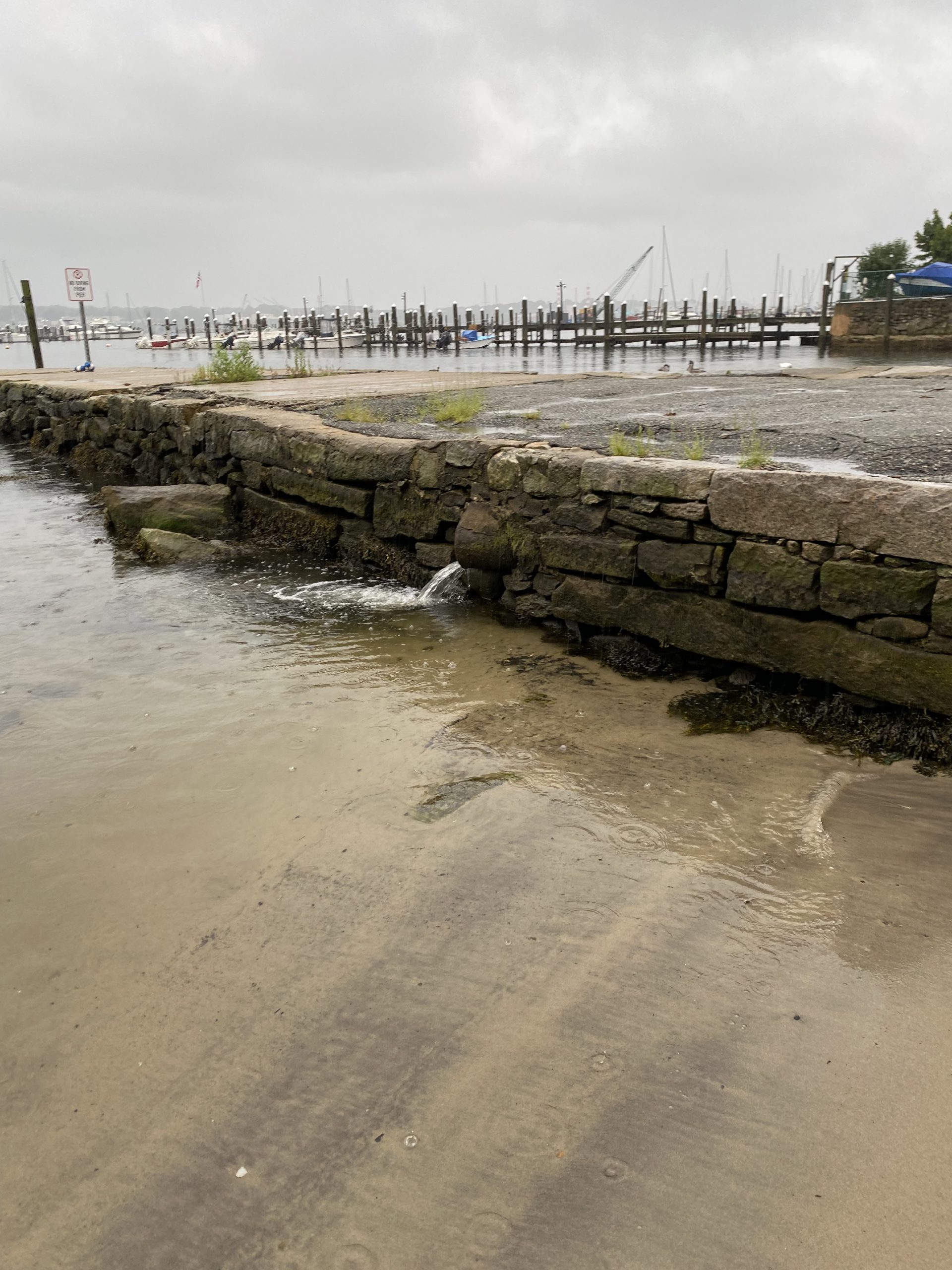
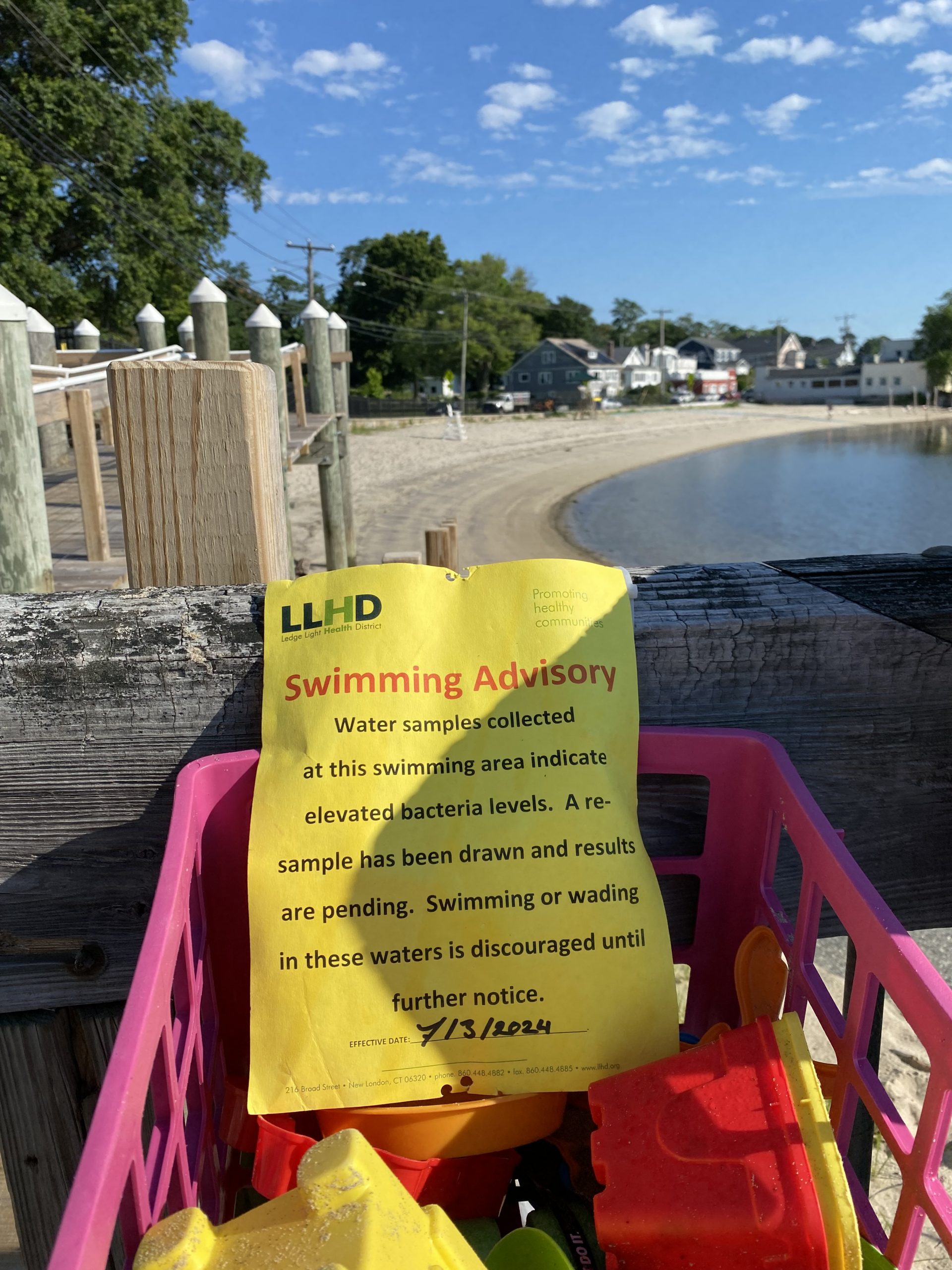
Project results indicate a stormwater outfall at the south end of the beach is a bacterial source. There also is a submerged outfall at the north end that could not be tested. Catch basins in the vicinity of the beach (near a park and athletic fields) also have measured high bacteria levels, particularly during wet conditions. Sampling during different times of day and varying tidal stage indicate changes in bacteria levels that are missed by standard once-weekly morning monitoring. The beach is enclosed on each side by walls and has numerous boat docks offshore, which shelter the beach from strong river currents and increase water residence times.
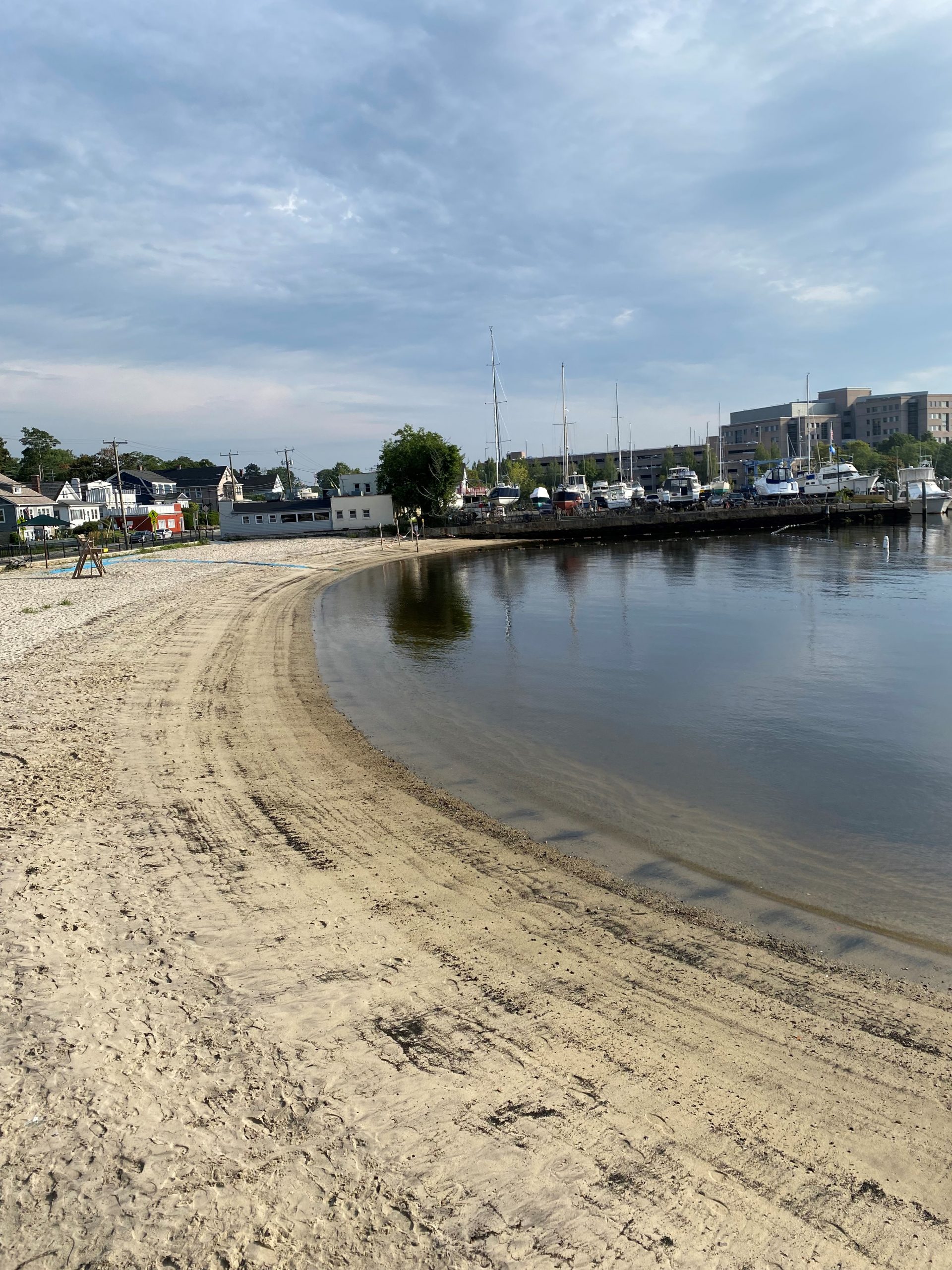 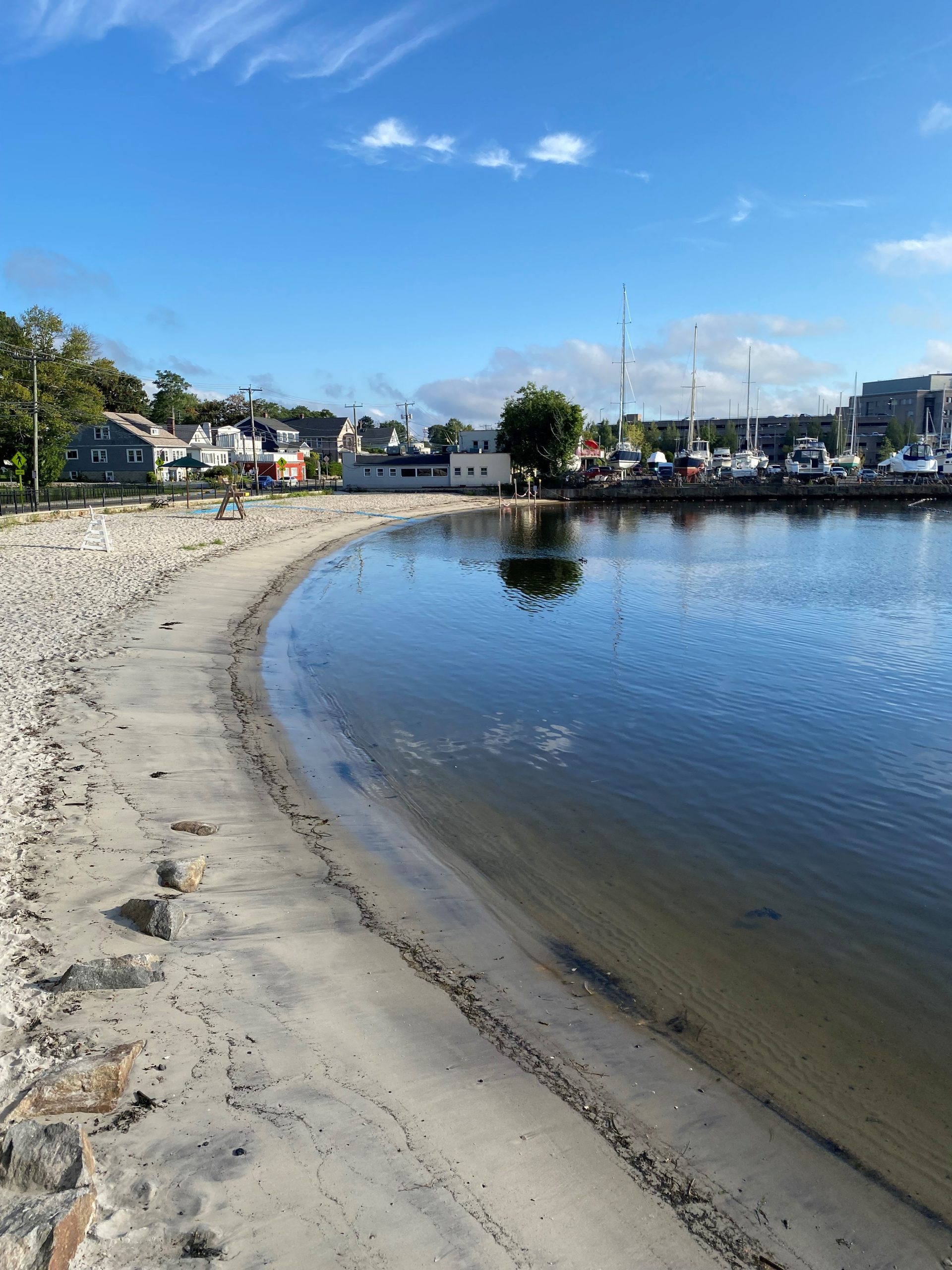 |
| Green Harbor Beach (New London, CT) at low tide and after high tide (Photo credit: Mike Whitney). |
|
|
| A high-bacteria outflow onto the beach during a storm and an empty beach during a swimming advisory (Photo credit: Mike Whitney). |
Rocky Neck Beach
Project results and state monitoring indicate the Bride Brook outflow is the main bacterial pollution source, which primarily affects the eastern end of the beach. Many beachgoers spend time around the bacteria-laden waters because of the proximity to the eastern entry point (under the railroad bridge) and the relatively shallow waters over the sandy shoals. Project observations measured conditions near the Bride Brook mouth and tracked outflowing waters along the beach and offshore. Flow conditions and bacteria levels vary considerably as tides change.
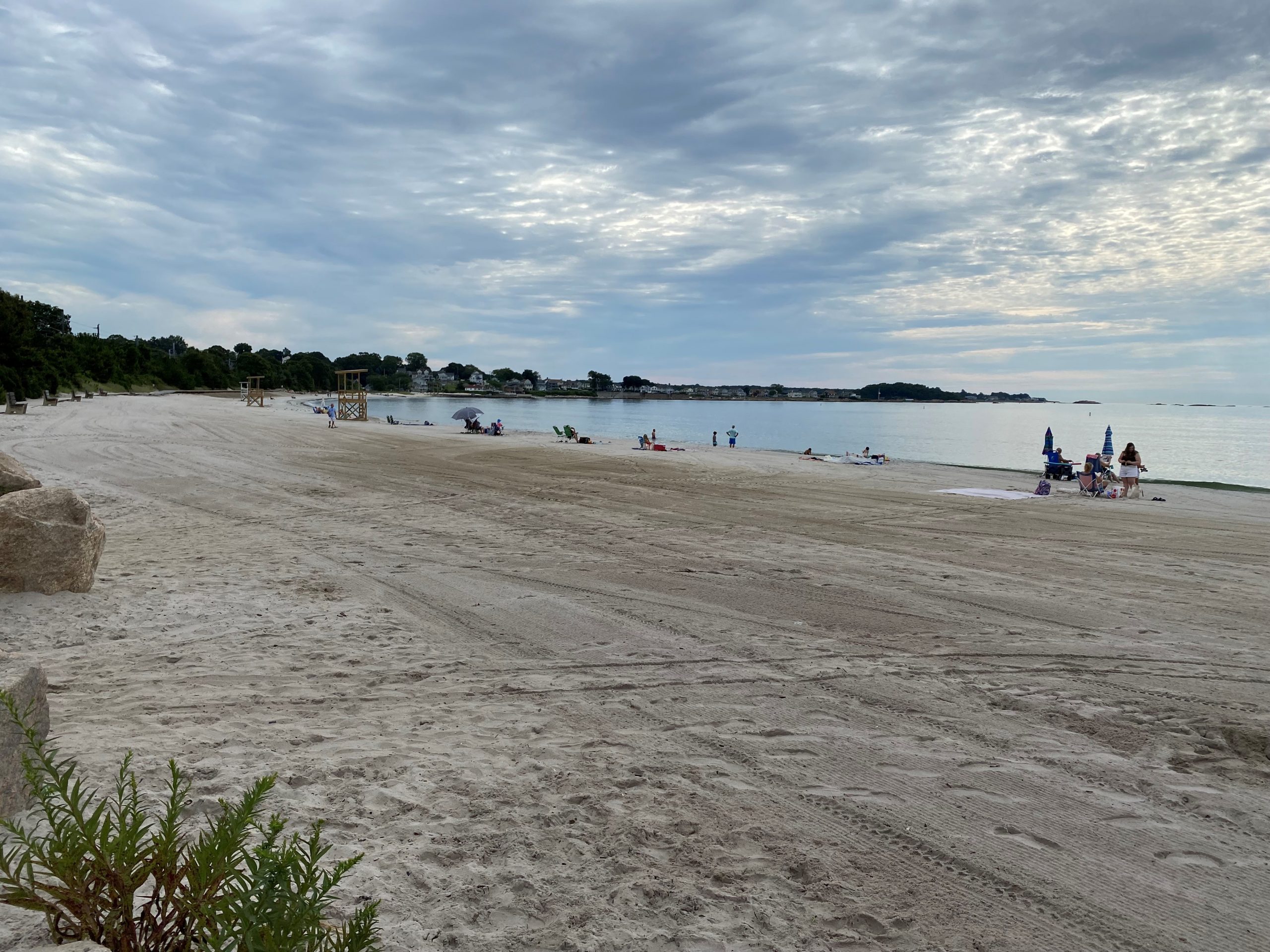
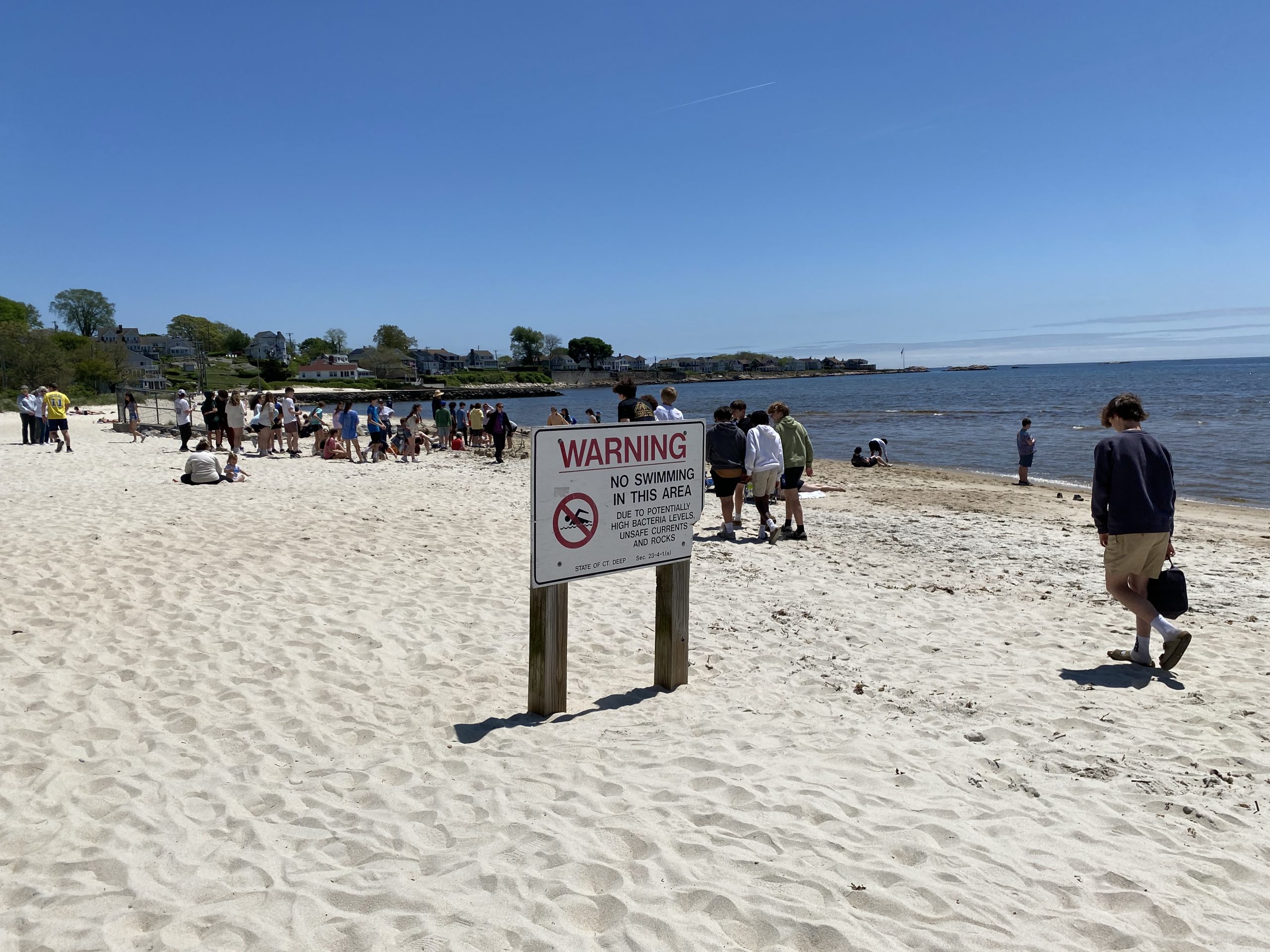
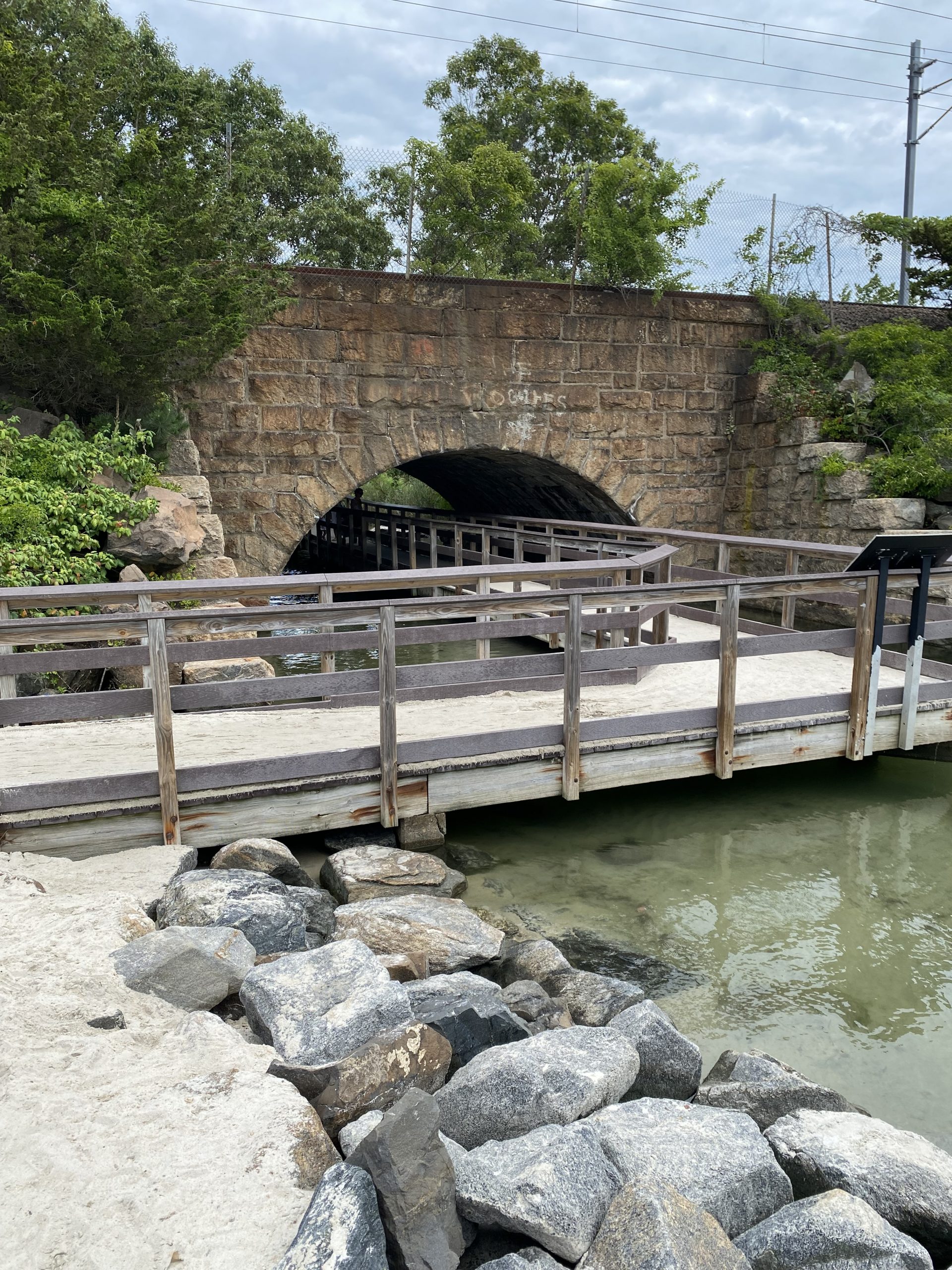
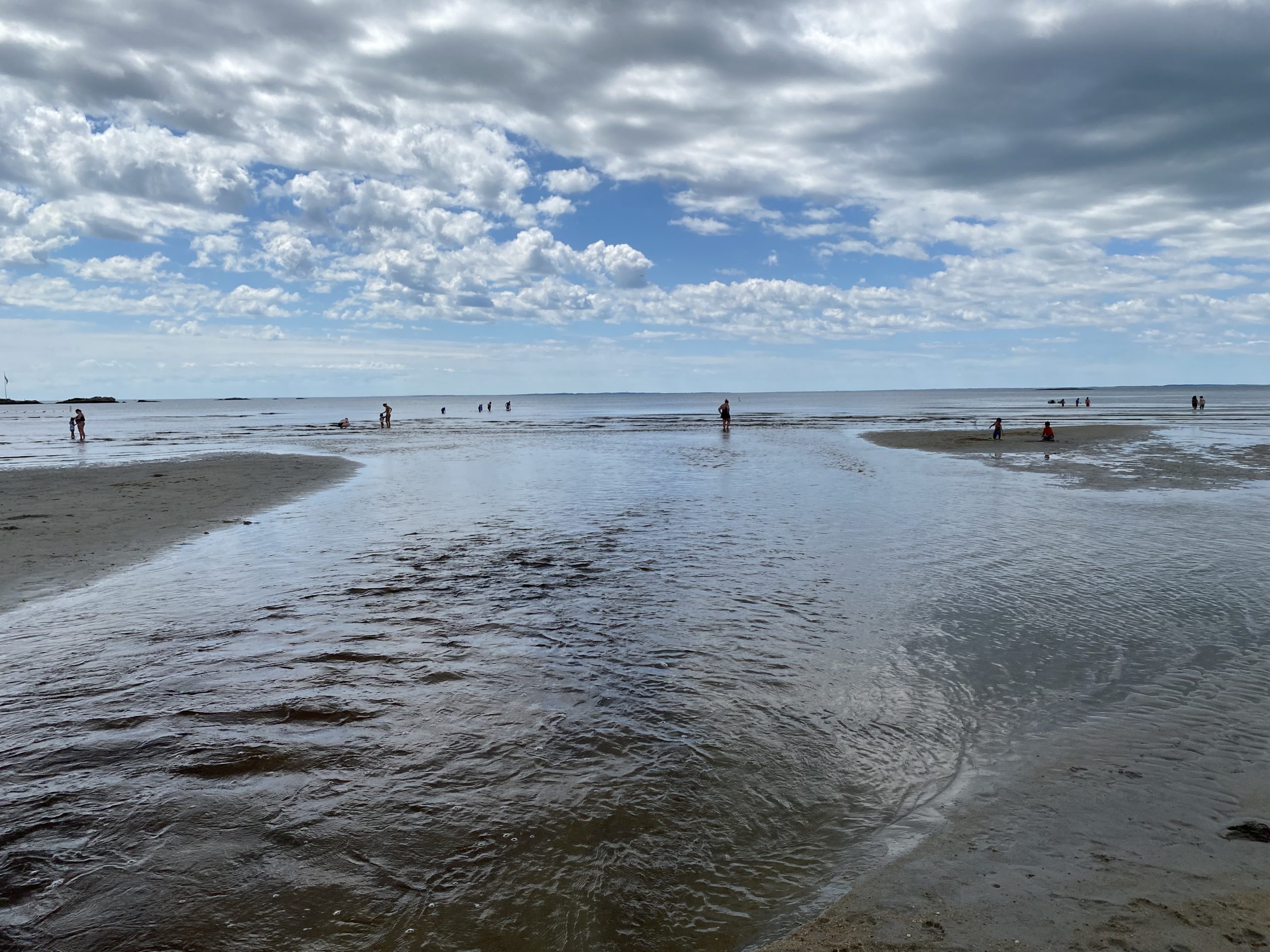
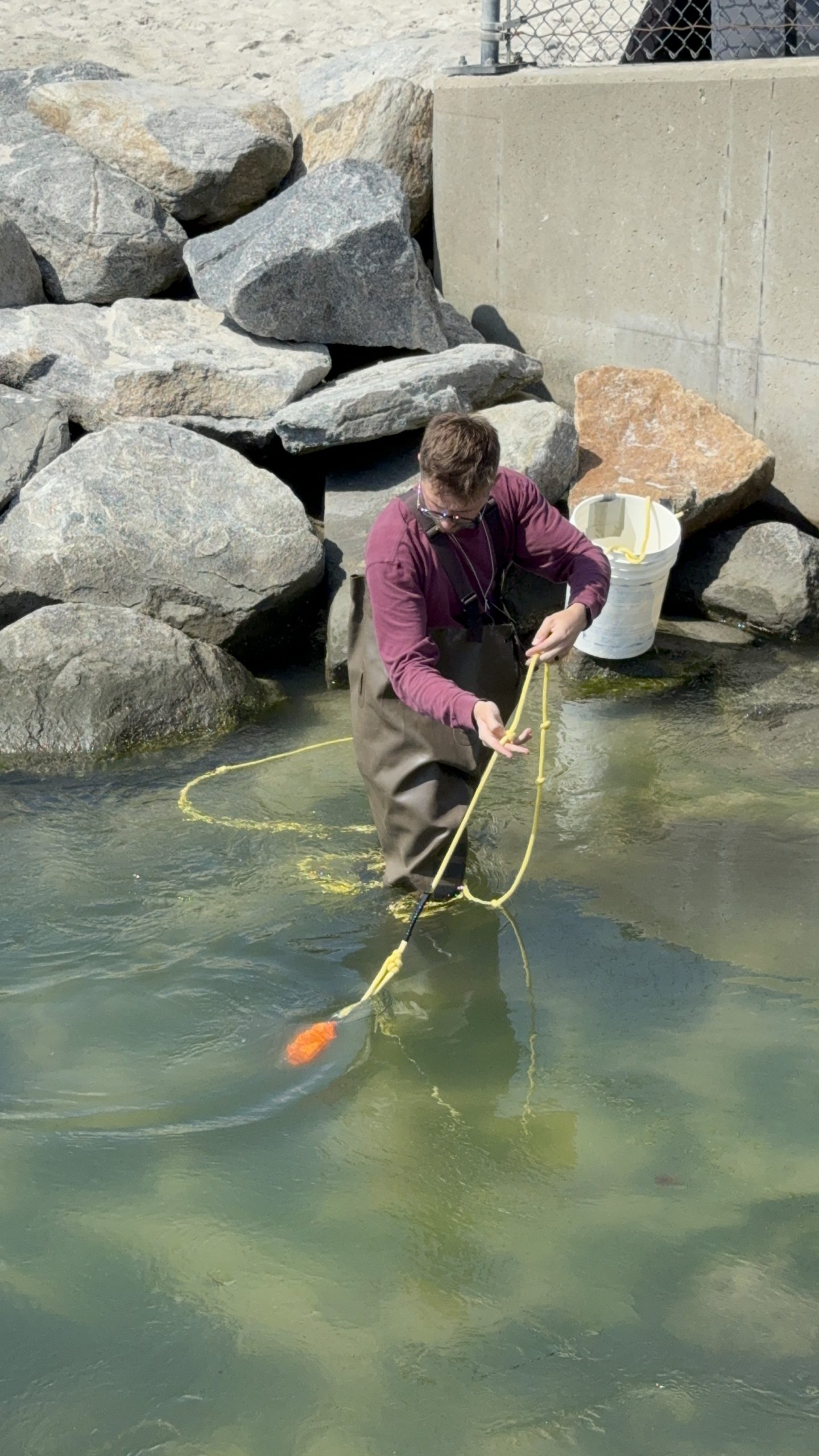 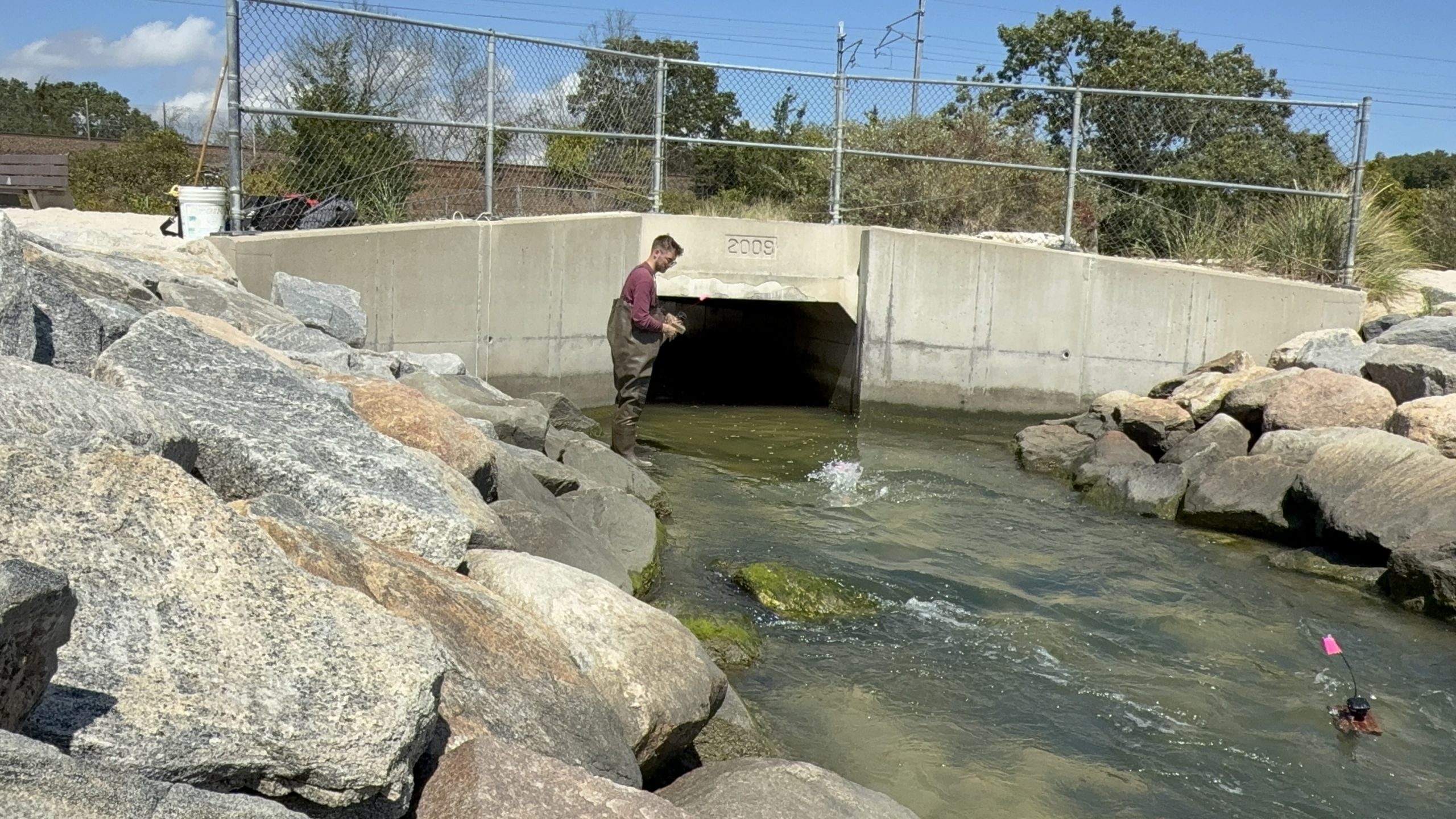 |
| Luke Glass measuring water properties and releasing GPS-tracked surface drifters at Bride Brook outflow onto Rocky Neck Beach (Photo credit: Mike Whitney). |
Rocky Neck modeling
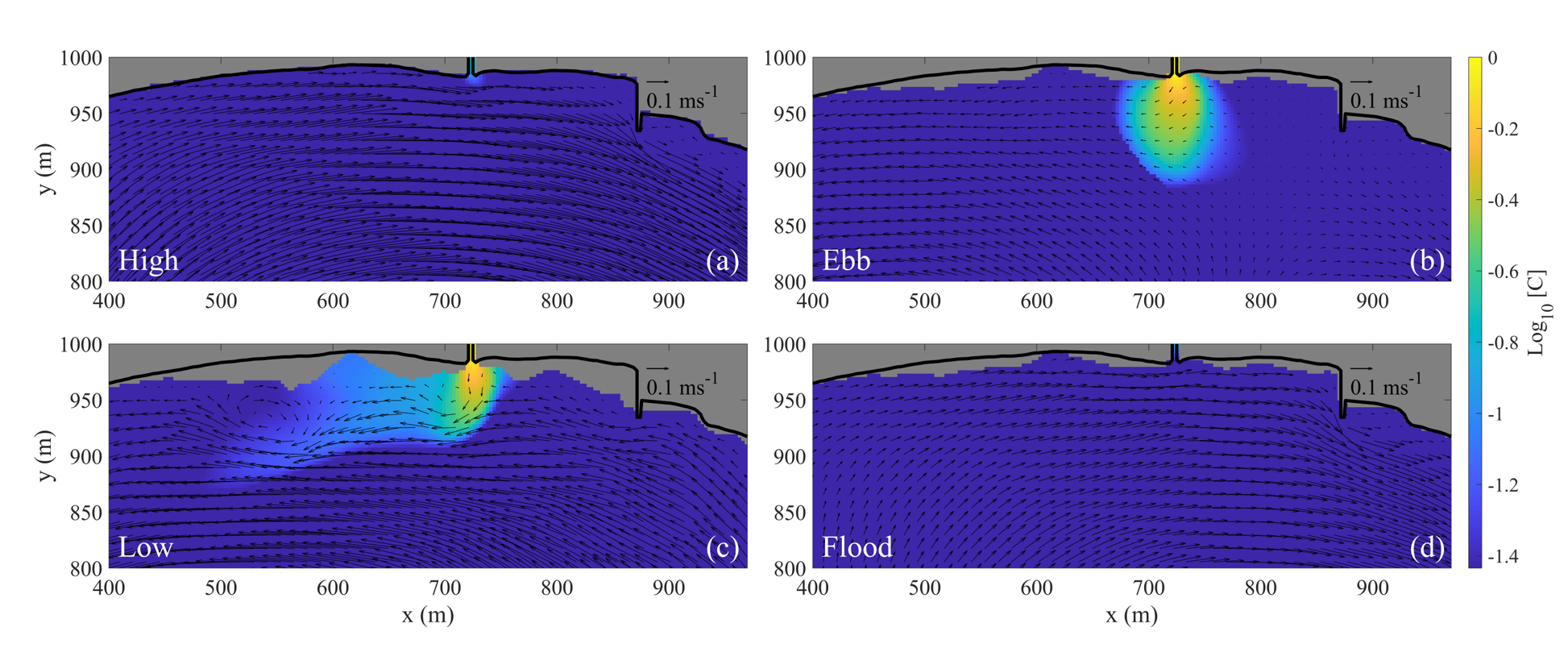
A high resolution application of the Regional Ocean Modeling System (ROMS) for the Bride Brook outflow into Rocky Neck Beach waters shows how the distribution of frequently bacteria-laden waters change with tidal conditions. Concentrated outflow waters occupy the most area during ebb and low tides. Neap tides favor higher concentrations than spring tides, which are characterized by stronger alongshore tidal currents and mixing. Model results illustrate hourly variability in water distributions that can affect beach water quality. Once-weekly morning bacterial monitoring does not account for such variations.
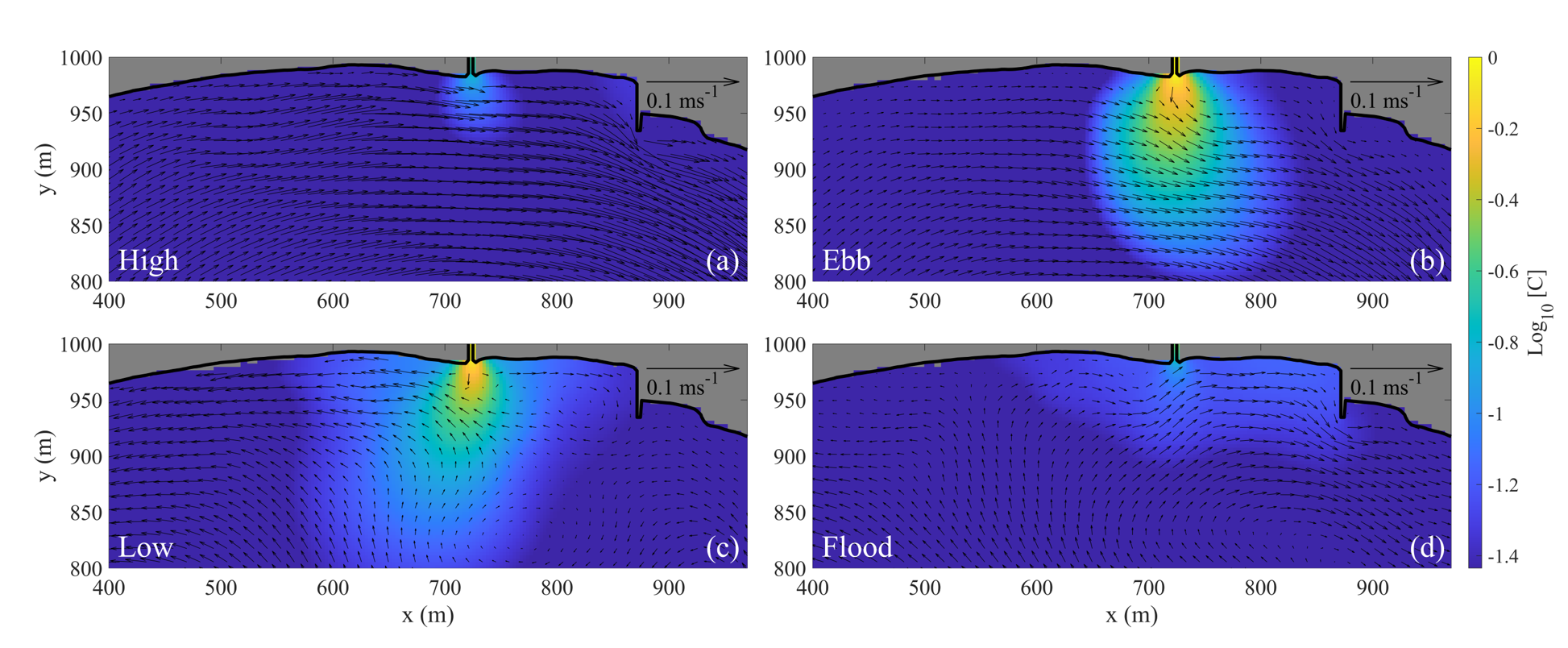 |
| Rocky Neck model results showing Bride Brook outflow concentrations changing throughout a NEAP tidal cycle (Figure Credit: Luke Glass). |
|
|
| Rocky Neck model results showing Bride Brook outflow concentrations changing throughout a SPRING tidal cycle (Figure Credit: Luke Glass). |
Bacterial analysis methods
The project tested new real-time qPCR methods (by Biomeme) for bacterial analysis against the Enterolert technique used in standard monitoring. Real-time qPCR offers advantages of on-site field operation (outdoors and with battery power) and short (1-3 hour) analysis times. The new technique, however, is more expensive and requires much more training than the standard technique. Project results indicate the importance of triplicate analysis and point to some quantitative limitations for the new technique. Based on our assessment, the Enterolert method is preferable (despite the 24-hour analysis time) due to its standard status, ease of use, and clearly interpretable quantitative results.
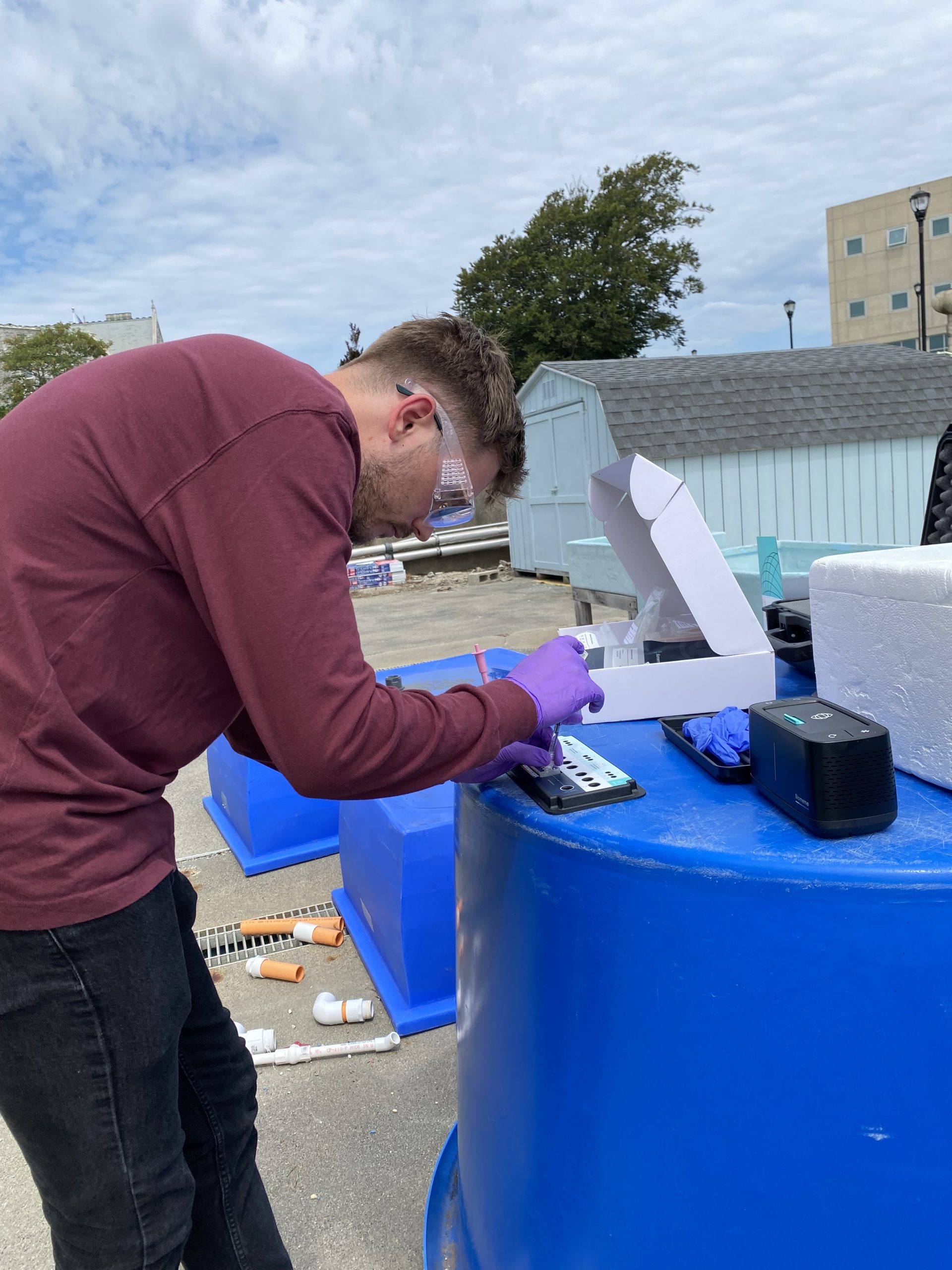 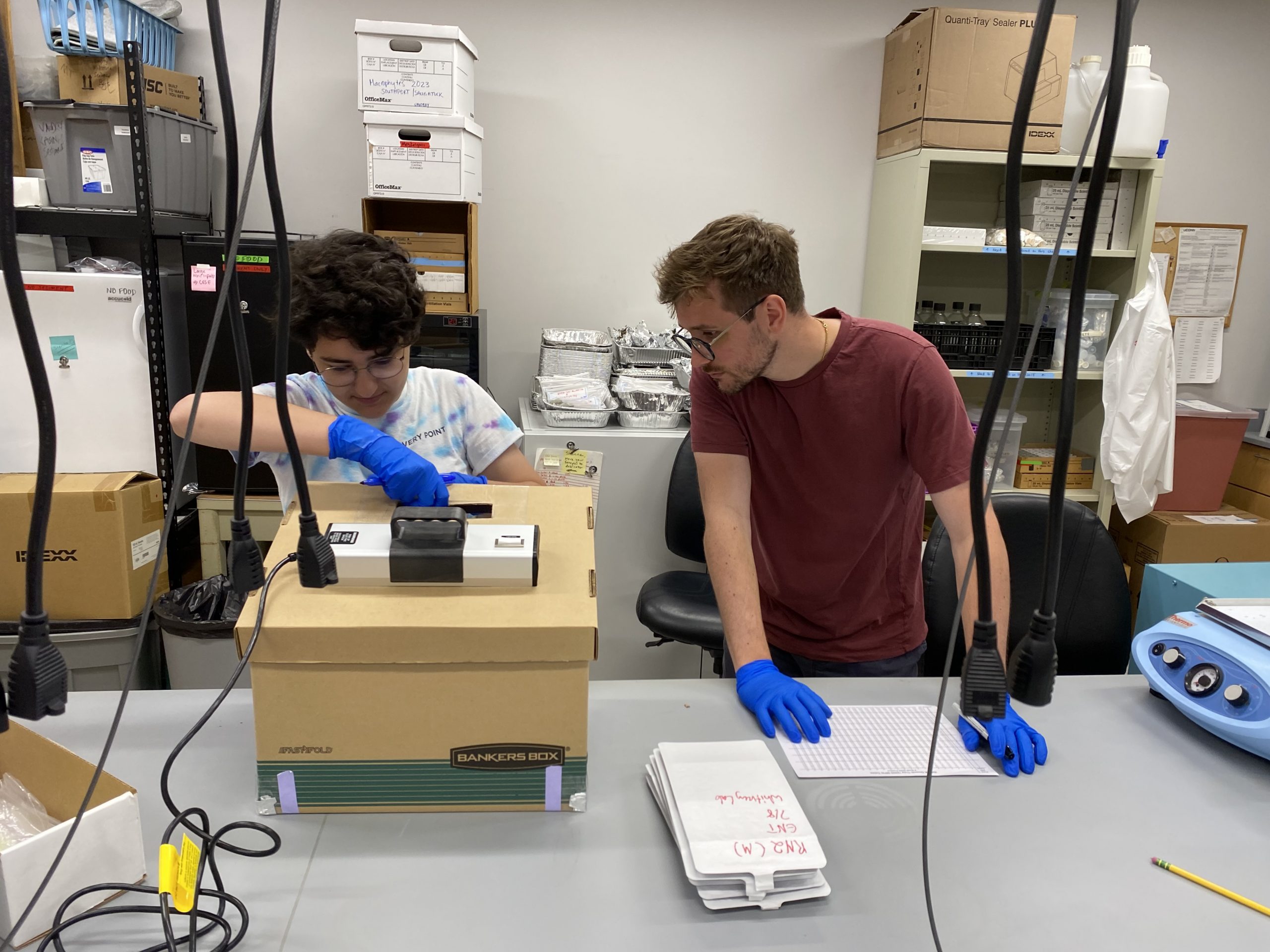 |
| Luke Glass and Parker Sallum analyzing water samples for bacteria using Biomeme real-time qPCR and Enterolert methods (Photo credit: Mike Whitney). |
Beaches throughout Connecticut
Historical analysis (2003-2021) of 74 saltwater swimming beaches in Connecticut indicate that precipitation, winds, and tides are equally important factors for high bacteria events. Two-thirds of measured high bacteria events (across all beaches and times) were associated with rain, onshore winds, and flood to high tides as individual factors. Results point to the utility of including winds and tides (along with precipitation) in online beach water quality sites such as the Sound Health Explorer and the importance of considering multiple environmental factors in beach monitoring and management for bacterial safety. More details are included in the scientific article “Links between high fecal indicator bacteria levels and rain, wind, and tides at Connecticut beaches” by Luke Glass, Mike Whitney, and Parker Sallum in Ocean & Coastal Management.
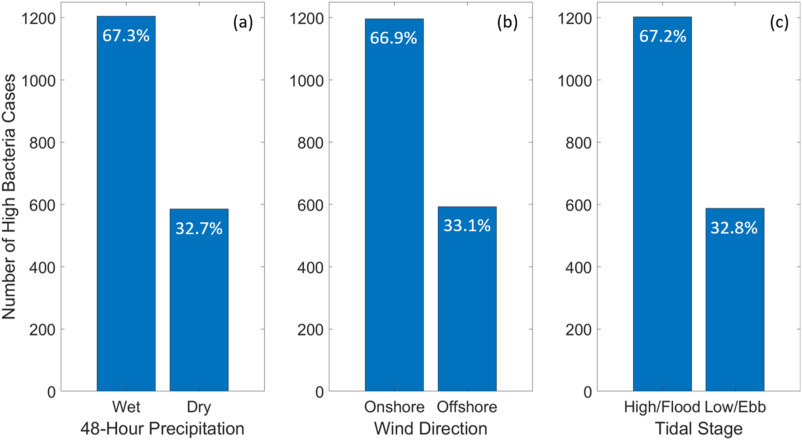 |
| Analysis of high bacteria events for rain, wind, and tidal conditions (Figure credit: Luke Glass). |
Resources
Ledge Light Health District Beaches
CT DEEP Swimming Water Quality Report
Long Island Sound Study Beaches